No-shows are one of the quietest profit leaks in a medical practice or medspa. Industry benchmarks put average no-show rates for outpatient medical practices somewhere between 15-30%, and medspas often see even higher rates for elective, non-urgent appointments. A single missed appointment doesn’t just cost the revenue from that slot — it costs the staff time spent scheduling it, the marketing spend that generated the lead in the first place, and the opportunity cost of a patient who could have been seen instead.
Most practices treat this as an inevitable cost of doing business. It isn’t. It’s largely a communication problem, and it’s one AI-driven follow-up is very good at solving.
Why Patients No-Show
The reasons are rarely dramatic. In order of frequency, they tend to be:
- They simply forgot — especially for appointments booked more than a week out
- The confirmation and reminder process was passive (one email, easy to miss) rather than active (a text requiring a tap to confirm)
- Life got busier than expected and rescheduling felt like more friction than just not showing up
- They lost interest or found a faster alternative between booking and the appointment date — especially common for elective medspa treatments with long lead times
Almost none of these are really about the patient not wanting care. They’re about the gap between booking and showing up being left unmanaged.
What an AI-Driven Reminder Sequence Actually Looks Like
A basic reminder is one text 24 hours before. An effective sequence is a structured cadence that does more than remind — it actively re-engages:
- Immediate confirmation the moment the appointment is booked, with a calendar add-to option
- A mid-point check-in for appointments booked far in advance, re-confirming interest and surfacing any scheduling conflicts early enough to fill the slot if needed
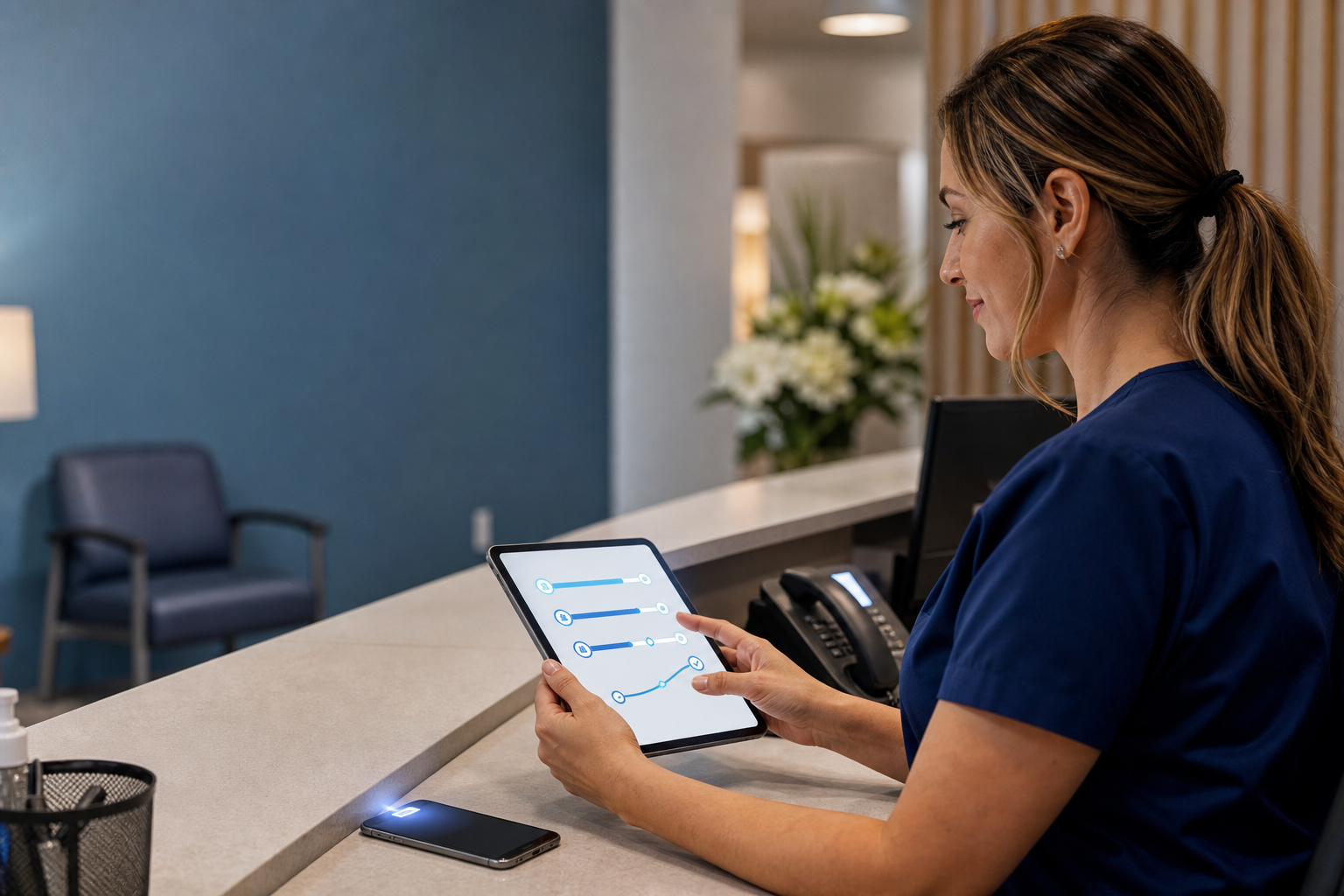
- A 48-hour reminder with an easy one-tap confirm/reschedule option — not just a notification
- A same-day reminder 2-3 hours before, timed to when people are actually checking their phones
- An automatic waitlist fill — if a patient cancels or doesn’t confirm, the freed slot gets offered to the next person on a waitlist automatically, rather than sitting empty
The key difference from a standard reminder system is that this runs on two-way communication. A patient who replies “can’t make it” or doesn’t confirm by a set deadline should trigger an automatic follow-up offering to reschedule — not just a missed appointment discovered the next morning.
What this typically changes: practices that move from passive reminders to an active, two-way confirmation sequence commonly cut no-show rates by a third to a half, without adding any staff time — the sequence runs itself.
Beyond Reminders: Recovering the No-Shows That Still Happen
No sequence gets no-shows to zero. The second half of the fix is what happens after a miss:
- An automatic same-day or next-day outreach to patients who no-showed, making it easy to rebook without feeling like a scolding
- Tracking repeat no-show patterns so front desk staff know who may need a deposit policy or a phone call instead of automated messages
- Feeding no-show data back into scheduling — if a specific appointment type or time slot consistently no-shows more, that’s a scheduling fix, not just a communication one
The Bottom Line
No-shows aren’t a patient discipline problem — they’re a follow-up design problem. The practices with the lowest no-show rates aren’t lucky; they’ve built a communication sequence that keeps the appointment front-of-mind and makes confirming or rescheduling effortless.
ClinicDigital.co builds these AI-driven reminder and follow-up sequences as part of our Front Desk Autopilot system, so practices recover this revenue without adding staff workload. Book a Free Strategy Call and we’ll show you what your current no-show rate is likely costing you.