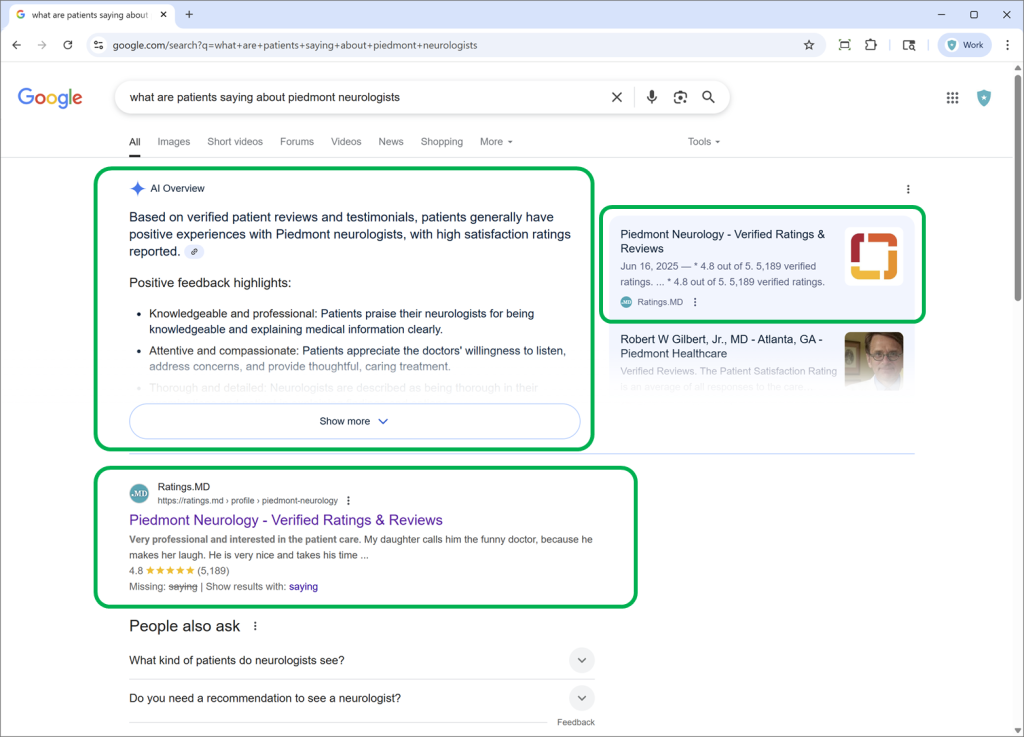
If a patient in your area searches for the type of care you provide and your practice doesn't appear in the results, you don't exist to them. It's that simple. They'll click on whoever does show up — and in most markets, that's one of the top three results on Google Maps.
The uncomfortable truth is that the majority of independent medical practices have significant, fixable gaps in their online visibility. Not because the competition is doing something extraordinary, but because most practices have never properly set up the foundational elements that Google uses to rank local businesses.
The good news: the most impactful fixes are well within reach, and many of them can be executed within 30 days. Here's exactly what to do.
Why Practices Go Invisible: The Root Causes
Before diving into fixes, it helps to understand what actually drives local Google rankings for medical practices. Google's local search algorithm weighs three core factors: relevance (does your listing match what the patient searched?), distance (how close are you to the searcher?), and prominence (how well-known and trusted is your practice online?).
Most practices have reasonable distance — they're located where they are. What they struggle with is relevance and prominence. Here are the most common visibility killers:
- An unclaimed or incomplete Google Business Profile — the single biggest missed opportunity in local SEO for healthcare
- A website with thin, generic service pages that don't tell Google — or patients — what conditions you treat, what procedures you offer, or who your providers are
- Little to no review volume, or a stagnant review count that signals an inactive practice
- Inconsistent practice name, address, and phone number (NAP) across online directories
- A slow or mobile-unfriendly website that Google deprioritizes in rankings
- No local content — blog posts, FAQs, or location pages — that demonstrate relevance to your community
Week 1: Claim and Optimize Your Google Business Profile
Your Google Business Profile (GBP) is the single most important piece of real estate in local search. It's the listing that appears in Google Maps and the local pack — the box of three results that shows up above organic results for most healthcare searches. If it's unclaimed, incomplete, or outdated, fixing it is your highest-leverage first move.
In the first week, complete the following:
- Claim your GBP if you haven't — go to business.google.com and verify ownership
- Complete every field: practice name exactly as it appears everywhere else, primary and secondary categories (use 'Medical Clinic,' 'Physician,' or your specific specialty), address, phone, website, and hours
- Add your services with descriptions — Google indexes this content and uses it for relevance matching
- Upload a minimum of 10 high-quality photos: exterior, interior, exam rooms, staff, and any equipment relevant to your specialty
- Write a compelling 'From the Business' description using natural language that includes your specialty, location, and the types of patients you serve
- Enable messaging so patients can contact you directly from the listing
Week 2: Audit and Fix Your Website's On-Page SEO
Your website needs to clearly communicate to Google what you do, where you do it, and who you serve. Most practice websites fail this test because they were built for aesthetics, not search performance.
Key on-page elements to audit and fix:
- Title tags: Every page should have a unique title that includes your specialty and location — e.g., 'Family Medicine in Dallas, TX | [Practice Name]'
- Service pages: Create a dedicated page for every major service or condition you treat. Thin, one-paragraph service pages don't rank. Aim for 500-800 words of genuine, helpful content per service
- Location signals: Your city and neighborhood should appear naturally throughout your content, not just in the footer
- Meta descriptions: Write compelling 150-160 character summaries for every page — these appear in search results and influence click-through rates
- Header structure: Use H1, H2, and H3 tags logically, with your primary keyword in the H1 of each page
- Page speed: Run your site through Google PageSpeed Insights. A score below 70 on mobile is a ranking liability
"Practices that add dedicated service pages for their top 5-10 conditions or procedures typically see a 40-60% increase in organic search visibility within 60-90 days."
Week 3: Build Consistent Directory Listings
Google cross-references your practice information across dozens of online directories to verify that you're a legitimate, established business. Inconsistencies — a different phone number on Healthgrades, an old address on Yelp, a misspelled practice name on WebMD — create confusion that suppresses your rankings.
In week three, audit and correct your listings on:
- Healthgrades — one of the most-visited healthcare review sites; claim and complete your profile
- Zocdoc — critical for practices that accept online appointment requests
- WebMD Physician Directory — high domain authority, strong Google trust signals
- Yelp — still heavily trafficked for healthcare searches in many markets
- Vitals and RateMDs — niche healthcare directories that influence local prominence
- Your local Chamber of Commerce and any specialty association directories
Every listing should have identical NAP information, a complete description, and ideally a link back to your website.
Week 4: Launch a Review Generation Campaign
Review volume and recency are among the strongest signals in Google's local ranking algorithm. A practice with 200 reviews and a 4.6-star average will consistently outrank a practice with 15 reviews and a 4.9 average — even if the latter is technically a better practice.
In week four, put a review generation system in place:
- Identify your top 20-30 most satisfied recent patients and personally reach out — a text or email with a direct link to your Google review page converts far better than a generic ask
- Add a review request to your post-visit follow-up sequence — ideally sent via SMS within 24 hours of the appointment while satisfaction is highest
- Train front desk staff to verbally encourage reviews from patients who express satisfaction at checkout
- Respond to every existing review, positive and negative — Google rewards engagement, and patients notice
The 30-Day Mindset: Foundation, Not Magic
Thirty days of focused work will move the needle significantly — but SEO is a compounding strategy, not a one-time fix. The practices that dominate local search in their markets didn't get there with a single sprint. They built a foundation and continued adding to it: more content, more reviews, more citations, faster page speeds.
What you can realistically expect from a focused 30-day effort: measurable improvement in Google Business Profile impressions, indexing of new service pages, resolution of NAP inconsistencies, and the beginning of a review momentum that builds month over month.
If you'd rather have a team handle this systematically while you focus on patient care, ClinicDigital.co specializes in local SEO for medical practices. Book a Free Call or request a free site audit on this website. We will show you exactly where you stand — and what it will take to get to the top of local search in your market.